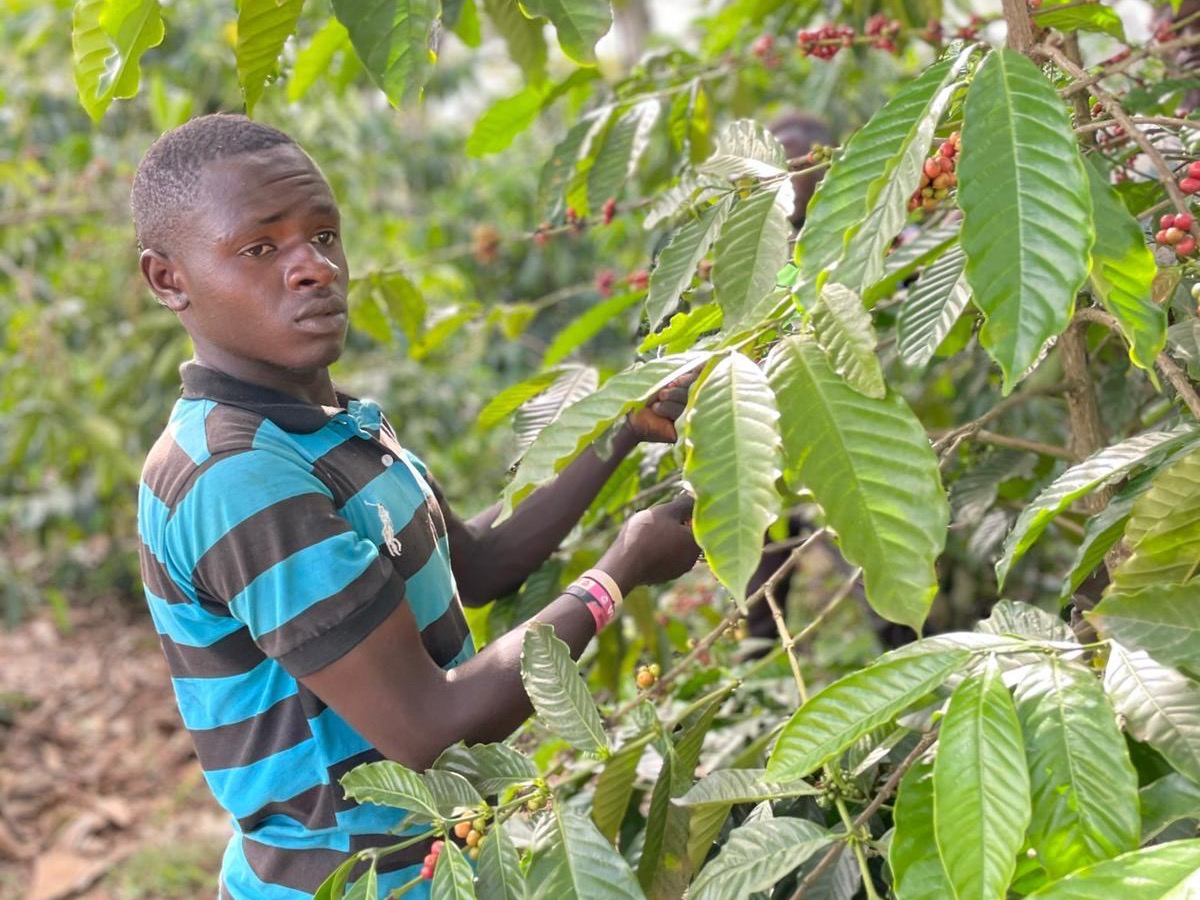
Celebrating success with Solidaridad’s coffee farmers

Last month, one of Acorn’s founders and account manager of partnerships, Margreet Muizebelt happened to be in Mbale to meet with our partner Solidaridad. Perfect timing, as Solidaridad ECA (East and Central Africa) was organizing a celebratory payment ceremony in the Mount Elgon region between Kenya and Uganda for the first coffee farmers to receive their CRU-derived earnings. In this blog, we report her experiences.
Solidaridad is one of Acorn’s local partners, an international network organization that aims to foster a more sustainable supply chain around the globe. They’ve been stimulating agroforestry in a variety of regions since 2017, among which East and Central Africa, where 1,000 farmers were certified and onboarded as part of Acorn in 2022. This pilot group of 1,000 local coffee farmers had seen many a project promising them the moon come and go.
For these farmers, the idea that they’d be paid to plant trees seemed like just another pie-in-the-sky project. That’s why Solidaridad organized a payment ceremony to make the first fruits of their labor tangible, and to celebrate their success as part of the Acorn project.
With invitations going out to local farmers, as well as government officials, community stakeholders, and representatives from related fields such as tea and cocoa, the event was a sizable one, with 300 people in attendance — some of whom had traveled for half a day to get to the location.

Speeches and theater
The ceremony saw speeches from the Ministry of Agriculture and the local governor as well as Margreet. “In my talk, I discussed climate change,” she recalls. “Why it’s a problem, what you can do about it, and how nature is wonderful in that it allows you to compensate for extraneous emissions — with companies willing to pay for the privilege.”
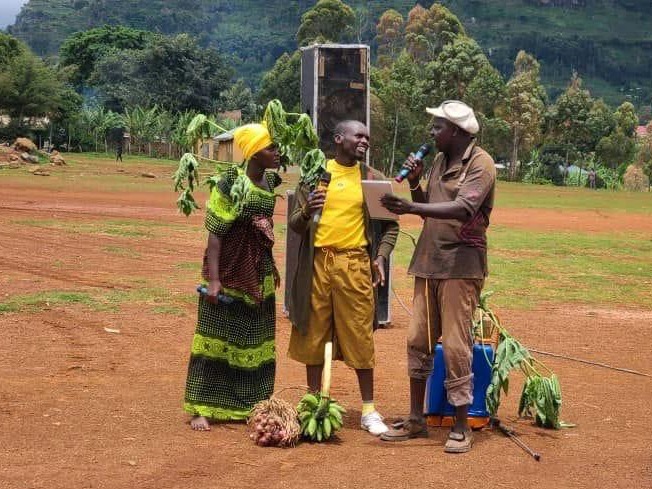
In Uganda, plays are an important medium to convey news and knowledge to various communities. This ceremony too featured a play for that reason, showcasing a wilting coffee plant that flourishes after trees are planted near it, yielding more and better produce as well as carbon money — to benefit a farmer’s entire family.
More trees, more harvests
With the climate in Uganda being a wet and rainy one, planting trees is crucial to prevent landslides and loss of soil. Additionally, trees ensure that more delicate plants don’t have to bear the brunt of the rainfall.
Some farmers even reported that planting trees enabled them to harvest multiple times a year instead of just once. Many of the farmers planned to reinvest their Acorn earnings in their farms, buying more livestock, more land, or more agroforestry-friendly trees.